
by Beth | Jul 30, 2025 | Uncategorized
My communication channels (email, Facebook, Linked In, etc) have been flooded lately with articles on fake candidates, fake job ads, fake resumes, A.I. conducting interviews on behalf of companies, and most recently, A.I. conducting interviews on behalf of candidates. It is so frustrating to go into an interview and not know if the other being has blood pumping through their veins.
I interviewed a candidate just yesterday that I am fairly certain was using prompts to answer my questions. And then, he slipped up. My clients recognized it, because they have been trained.
Read that again: they had been trained.
I have been doing this work for over 20 years. I have seen markets where the candidate pool was enormous and markets where the candidates were very hard to find. I have seen markets with huge number of job listings or very few job listings. Think of the housing market: same thing. Lots of houses to sell with lots of buyers or few buyers. Very few houses to sell with lots of buyers or very few buyers.
For the hiring industry, one thing has never changed: we still don’t train our people to conduct effective interviews, and until we prioritize that training, we will continue to fall prey to scam artists. We will continue to make bad hires.
A.I. has many uses, and there are ways that A.I. can make your business more efficient. Even in recruiting and hiring. Because the stakes are so high, you must have an H.I.L. (A human-in-loop) to oversee your efforts. That person MUST be trained in conducting effective interviews.
POWER THOUGHT: A.I. is not the threat. The threat is lack of training,

by Beth | Jul 11, 2025 | Uncategorized
I met with one of my favorite clients a few weeks back. He has semi-retired, and he is now President Emeritus at his current bank. I adore this man, even though it has been about 15 years since we worked together.
I asked him what he attributed to his success.
He said, “It’s my management style.”
This was NOT the answer I expected. “And what is that?” I asked.
“MBWA.”
Huh?
“Manage by wandering around.”
I laughed out loud. I mean, really? This was one for the books. But the more I thought about it, the more brilliant it is.
He told this story about “The J’s” in the accounting department: Julie, Janie, Jamie and JMonica. They all laugh and laugh every time he walks into the department. He jokes. Then, he asks how things are going. And, they tell him.
As a management process: He gets to know their names. He gives nicknames. He establishes rapport. He is consistent. He listens. He asks. Then, he isn’t caught unaware.
In the restaurant business, we used to say that you can’t run a restaurant from the office. MBWA is the same concept, presented more memorably by a man who has been very successful for a long, long time.
Today, I challenge you to get out of your office. Go see what you see. Go hear what you hear. Talk to your staff. See where your adventures take you. You might be surprised by what you learn.
POWER THOUGHT: It is time to leave your office and manage by wandering around.
***Thank you, Tom C! You are a true gem!
by Beth | Jun 30, 2025 | Uncategorized
I had a client reach out to me and tell me that his business is doing well, with the exception of one department. That department had a revolving door of people. “I walk in there and don’t know anyone. Then 2 months later, I walk in there and again don’t know anyone.”
I spent a few minutes asking him some questions, and we scheduled a Discovery meeting. I went into the office and interviewed several people in that department. Imagine my surprise when I found out that the Department Manager was using his blood connection with the owner to delegate work that was supposed to be his, to harass employees, and to threaten folks with losing their jobs. No one reported it, because he was kin to the owner.
This problem had gone on for years.
Since then, the owner fired his kin. It caused a rift in the family, but as the owner said “I’d rather have a rift in the family than a drain in my business.” I followed up with the owner later, and he said that walking into that department is a “breath of fresh air.”
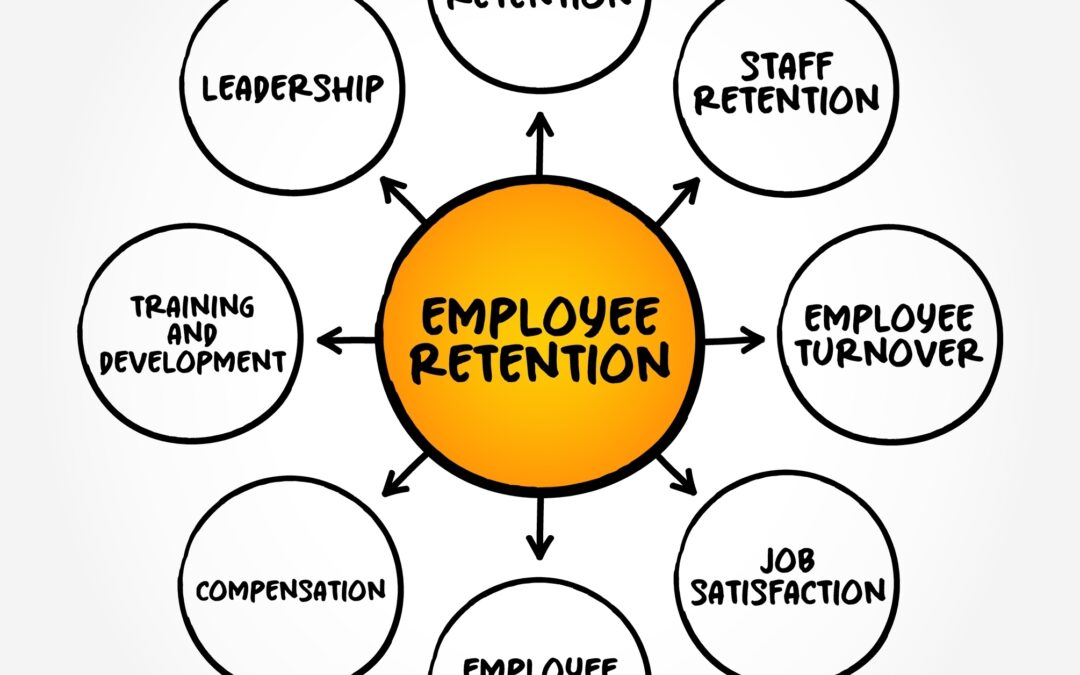
Here are 5 things to do when you have a retention problem:
1) Determine if there is a trend in the employees who are leaving. Is it the same department? Same position? Same gender? Same age of employee?
2) Once you determine the similarities between the people who are leaving, go interview those that are staying.
3) Your employees who are staying are NOT going to tell you the whole truth. They are also NOT going to tell you how bad things are. Your job is to take the “whispers and the hints” that they tell you, and multiply it times 10. ANY hint of a bad employee means that it is WAY bigger than they are telling you.
4) Remember: people don’t leave jobs; they leave managers. If one manager is losing lots of people, then they are most likely the culprit.
5) If it isn’t the manager, check salaries. Check how many hours people are working. And finally, ask them this question: If you could wave a magic wand and fix this department, what is the one action you would take?
I am happy to say that my client is really pleased with how things are going now. He and his family are in therapy to solve the rift.
POWER THOUGHT: Retention can cause tension, but it doesn’t have to.
***If you are struggling with employee retention, reach out for a conversation. I’m happy to discuss what these issues are, and some of the potential solutions.

by Beth | Jun 17, 2025 | Uncategorized
Back in my restaurant days, a mentor of mine gave me a copy of Popes: A guide for Service Management. It was written by a man named H.H. Pope for his restaurant company, and it was a set of 21 rules for how to run a restaurant.
Learning Popes was a game changer. We taught it to every one of our managers. After everyone learned the guide, we were able to just shout out a number, and everyone knew what it meant. We were able to make changes quickly and could adapt on a dime to whatever the circumstances were.
At the end of the guidelines, there is a simple question that you ask yourself after every shift:
Are you proud of it?
According to H.H. Pope, “we must be proud of everything, which is going on, whether it is the cleaning, the preparation of the food, the service to the guests, or the efficiency of the operation. We insist that pride be the objective of everyone in the organization. Anyone who doesn’t wish to be dedicated to this objective cannot stay with our organization.”
I absolutely love this concept. When you are proud of your work, that translates to everyone in the organization. Pride in your work is a high standard, and yet, a very simple form of measurement.
If you aren’t proud of an area in your organization, that area is where you need to spend your time, effort and energy improving until you do feel proud of it. Don’t stop improving until your pride of that area returns.
POWER THOUGHT: Pride is something to be proud of.
*** I have searched high and low for anyone from H.H. Popes, Inc, so that I could thank them for this concept and give them proper credit for it. I have yet to find anyone. If any of you know who I can contact, please let me know.

by Beth | May 30, 2025 | Uncategorized
I met with a man a few weeks back who had seen me speak at a meeting. His name is Gary Bren, and he is the Managing Partner of Turner Technologies, out of Omaha, Nebraska. He wanted me to teach his directors how to run a hiring process, and he was very proud of his non-existent turnover rate. “In our industry, the turnover rate is 25%. The turnover rate at our company is 4%,” Gary said.
In full transparency, I was very skeptical and rolled my eyes inwardly, but I maintained my composure and asked, “What do you attribute to your low turnover rate?”
“It’s the way we value our people. “
Right. Again, with my inward eyeroll, I asked “Can you give me an example?”
“Oh, I can give you many! One time, a man who was 23, with a wife going into labor and a toddler at home, applied for a job with us. We made him an offer, and he accepted. He was going into the hospital with his wife for their child’s birth. He was taking the weekend to get the family settled, then he planned to go back to work Monday to finish out his 2 weeks. When he gave notice, they fired him on the spot.”
This employee called Turner and asked if he could start two weeks early. The IT Director went to Gary and told him the story. Gary said, “Tell the new employee that we will pay for his 2 weeks, but if he comes to the office before the 2 weeks is up, I will fire him. Tell him to take the time with his family, then he can start on his original start date with a full paycheck.”
I started crying, grateful to have been called out on my negative attitude.
Since then, Gary has told me numerous other stories about supporting employees through life transitions. Like Rich, who was given a paid leave of absence so that he could be with his dying mother in her last days. Or Mike, who was given a paid leave of absence to go to China to adopt a baby. Mike is now a part-owner of Turner. (Names have been changed to protect those amazing, lovely employees).
In a business world focused on squeezing out every dollar that they can and wondering why “employees just aren’t loyal anymore,” I say, “look at Gary. Adopt the Turner Way. See how much money you make when employees feel valued, supported and trusted.”
And to Gary: Thanks. I needed that. (Sniff!)
POWER THOUGHT: Want to see a turn around in retention? Turn to The Turner Way.