by admin | Mar 28, 2012 | Interview Techniques
 With sweaty palms and a dry cotton mouth, Jane Smith opened the door and walked in. She approached the greeter and requested to meet with a certain person. She checked her hair and makeup in her hand mirror and then tried desperately to calm her nervous stomach. When she looked up, she saw the person that she was meeting, and she took a deep breath. “Here we go,” she thought. Is this a date or a job interview?
On the outside, the excitement of the first meeting, nerves and newness of it all give the interaction of an interview compared to a date an appearance of being the same. Candidates are in a vulnerable state when they walk into a job interview and going on a first date can produce similar feelings of vulnerability. But are they the same?
The largest difference between a date and a job interview is the power of the interviewer over the candidate. The interviewer decides when the interview will take place, its location, time of day, the agenda, whether there will be a second interview, whether the candidate gets the position and whether the candidate receives a “no thank you” for not retaining the position. All of the power sits with the employer. In dating, the 2 people come to the table as equals.
This power difference is why employers struggle with interviewing. They are often as uncomfortable with the power differentiation as the candidate, unsure of how to get around an environment that brings about one individuals desire to please and the others role to choose. Their sole desire is to make a good assessment for their next hire, yet candidates are just telling them what they want to hear. And of course they are! They are trying to find a job and willing to bear sweaty palms!
by admin | Mar 21, 2012 | Employee Hiring
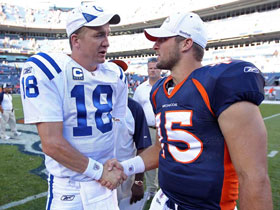
Peyton Manning is in and Tim Tebow is out.
First, when making a good hiring decision, a boss must ask this question: Can I work with this person? Both Tebow and Manning have solid reputations for being workable, and in this era of cranky celebrities, this is point for both of them.Was this a good hiring decision? Only time will tell.
Second, the next question is can they do the job? While Tebow has been somewhat inconsistent last year, so has Peyton Manning. While Manning has experience on his side, he is also injured and set in his ways. What happens if he gets injured again?
Third, is the candidate passionate about the job? Manning is a little crusty around the edges. He is older and he was a leader in the lockout with the NFL. Tebow loves the game of football. He is energetic, passionate and needs some coaching.
My vote? Hire Manning to train Tebow. Now you have experience coupled with passion and healthiness. That is a winning combination.
by Beth | Jan 18, 2012 | Adventures in Interviewing, Employee Hiring
I hear this comment more often than I care to. As an employer, why would I want give you a job that you won’t hate? My clients and I want candidates that come to the table with enthusiasm and a positive attitude. If a criterion for the next position includes a “job that I won’t hate” pass immediately. A positive outlook is a choice by the candidate and a must have job requirement for any employer.
by Beth | Jan 6, 2012 | Adventures in Interviewing
I called a woman recently to schedule her for an interview. She thanked me for calling her, but notified me she will not be available. She would be getting a face lift next week. Slightly stunned because I wasn’t expecting that unusual response, I thanked her for letting me know and wished her great success. I really appreciate people who let me know their plans, because no one’s time was wasted.
by Beth | Oct 20, 2011 | Interview Process, Selecting Good Candidates
In the movie “Up in the Air,” George Clooney remarks “I stereotype. It’s faster.” It may be faster, but it is not 100% predictable. In other words, you cannot predict an employee’s success in their position by stereotyping. I work with business owners and hiring managers every day who use stereotypes to predict employees’ success or failure. I say that for every stereotype that exists and is used to predict behavior, I have a success story to disprove it.
So, which interview method works best to accurately predict the likelihood of success in an employee? The answer may surprise you: just listen.
Don’t talk. Don’t think about the next question you are going to ask. Don’t look at your phone. Don’t clean your finger nails. Don’t tie your shoe. Sit. Focus. And listen. Really hear, observe and absorb what your candidate is telling you. Be entirely present to the moment, and the candidate will tell you if they will be successful in the position with their answers.

 With sweaty palms and a dry cotton mouth, Jane Smith opened the door and walked in. She approached the greeter and requested to meet with a certain person. She checked her hair and makeup in her hand mirror and then tried desperately to calm her nervous stomach. When she looked up, she saw the person that she was meeting, and she took a deep breath. “Here we go,” she thought. Is this a date or a job interview?